Bi-Weekly Recap: Nov. 26 – Dec. 9, 2022

As the FTX side-effects continue to play out, a few key developments have set the stage for crypto to become more sustainable and user-friendly in the near future.
Recent Trends and Developments
The Push for Real-World Assets
It is no mystery that DeFi has struggled to sustain value through the recent downmarket. The primary use case today remains speculation. Yet, a glimmer of hope for DeFi comes in the form of real-world assets (RWAs), which are tangible assets such as gold, cash, and real estate in contrast to crypto. They represent over a $200 Trillion global market. RWAs can be brought on-chain and used as collateral for loans.
Maker is a collateralized debt platform on Ethereum and has done significant work in bridging traditional finance (TradFi) and DeFi. Users receive the stablecoin DAI in exchange for posted collateral. In June 2022, MakerDAO approved Huntingdon Valley Banks’s collateralized lending proposal as one of its real-world asset vaults. The vaults are smart contracts that hold collateral in escrow until the borrowed DAI is returned. The bank now represents the second largest Maker RWA vault, only second to 6S Capital, which was the first established vault.
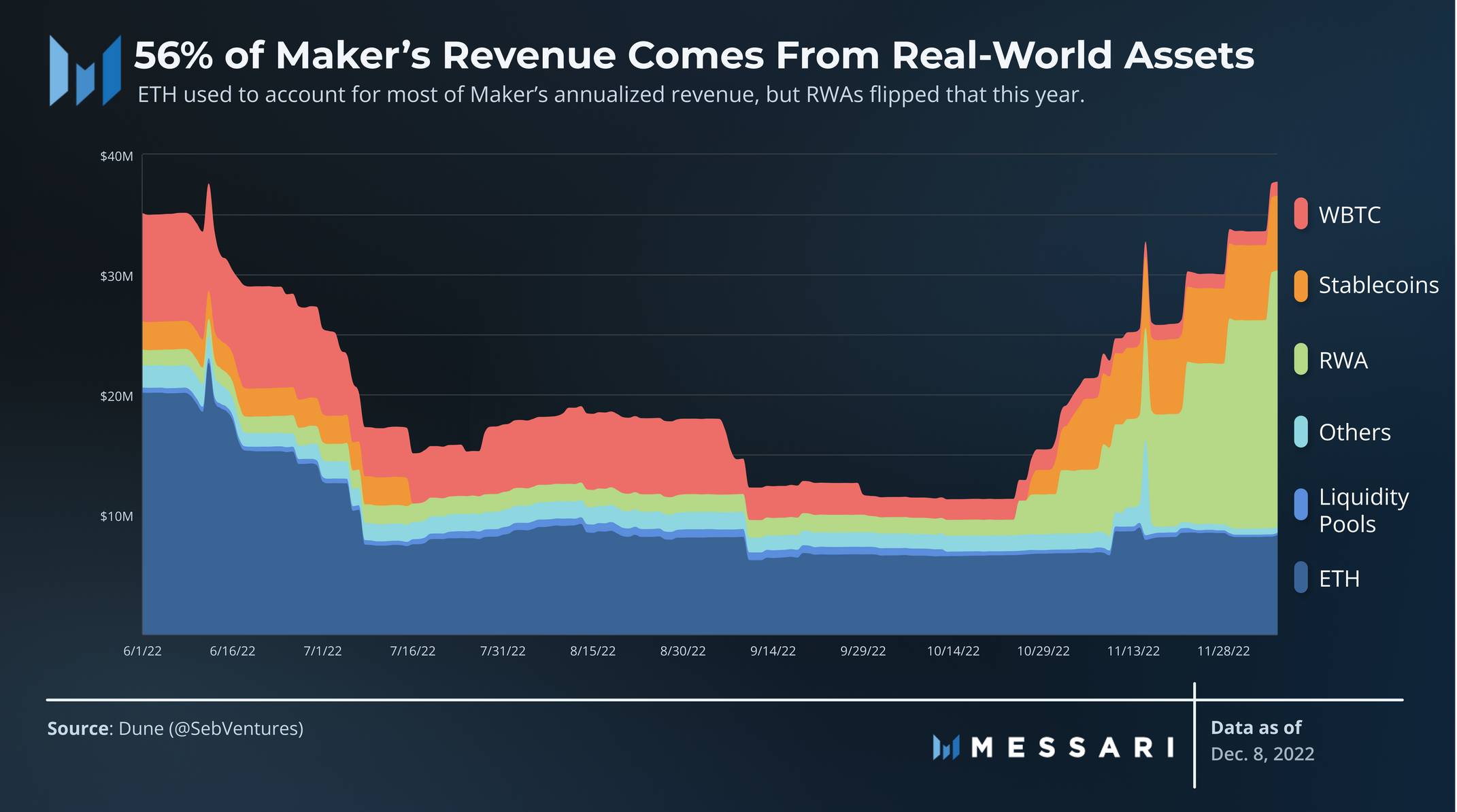
This push for RWAs has proven effective for Maker. Though Maker was on a downward trend in annualized protocol revenue, there was a recent upturn, with RWAs contributing to over 56% of total revenue. RWAs are used heavily in lending and yield-generating services in TradFi and are effective in bridging TradFi to DeFi. Despite DeFi plummeting, RWAs can keep it afloat even in times of volatility.

Eshita is a Research Analyst at Messari focused on Web3 topics. Previously, she was a Venture Fellow at Bloomberg Beta and prior to that was working on data at Shareworks by Morgan Stanley.