Arwen raises $3.3M to bring non-custodial trading to centralized exchanges

Arwen, a blockchain infrastructure company that allows self-custody trading from centralized exchanges, raised $3.3 million led by Slow Ventures with participation from CoinShares, Collaborative Fund, Underscore VC, and DG Lab Fund.
We detailed how Arwen works in a pro research report last summer:
This is accomplished via an escrow mechanism where the user sends funds to a Hashed Time-locked Contract (HTLC). They then ask the exchange to do the same and pay a fee in order to compensate the exchange for locking up their tokens. The user can then trade across the escrows with each individual trade being executed atomically. Whenever the user wants to withdraw their tokens they can, and so long as the escrow is closed before the time expires their tokens are safe. If time expires before the user closes the escrow their funds face the same security risks as any other tokens on an exchange. However, at any point in time the user can re-escrow the funds or withdraw them altogether.
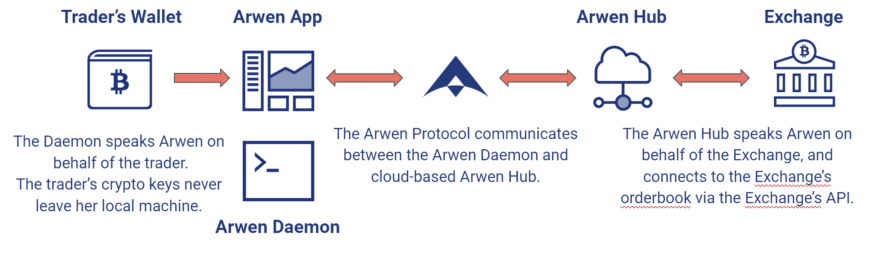
The protocol currently supports BTC, LTC, and ETH on KuCoin and the team is in talks to add more institutional partners. They also believe that this technology can extend to more than just crypto exchanges as the clearing and settlement process in the traditional world comes with its own risks and inefficiencies that could be alleviated using Arwen.
Why it matters
- Crypto exchanges have been hacked for around $300 million last year. With Arwen's escrow mechanism traders do not need to deposit funds with the exchange removing the risk of loss due to a hack. This has long been a core value proposition of decentralized exchanges, however, this becomes damaged as Arwen not only offers non-custodial trading but access to order-books with orders of magnitude more liquidity. Unless DEXs can find a way to compete on other features Arwen could significantly hamper their long-term growth.
- The world of Open Finance has understandably steered clear of centralized exchanges, but this new model for interacting with them more trustlessly could potentially change that. By bridging the gap between the two worlds, both would stand to benefit by tapping into the liquidity and userbase of the other.
Let us know what you loved about the report, what may be missing, or share any other feedback by filling out this short form. All responses are subject to our Privacy Policy and Terms of Service.