Art Blocks: The Rise of Generative Art

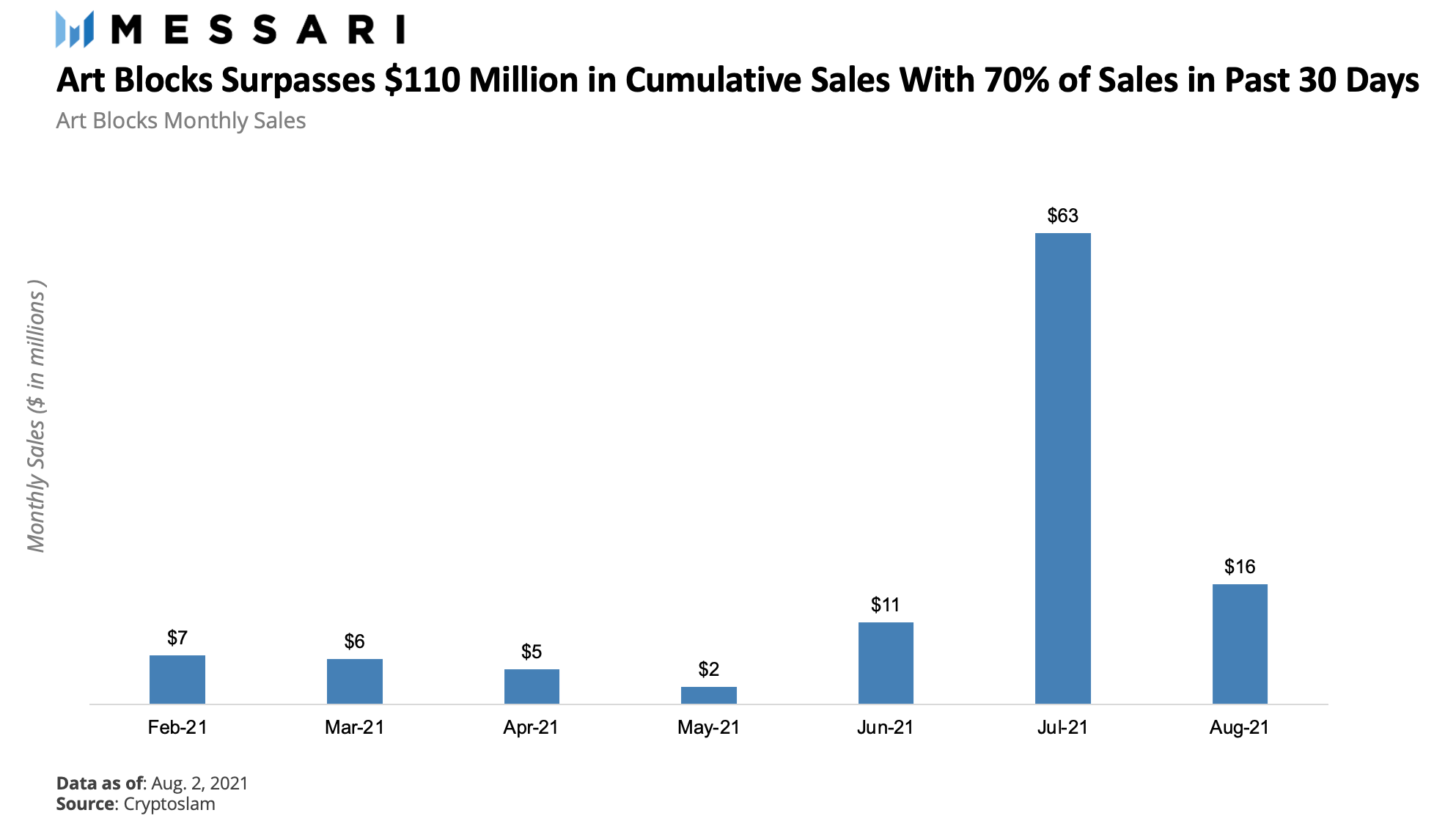
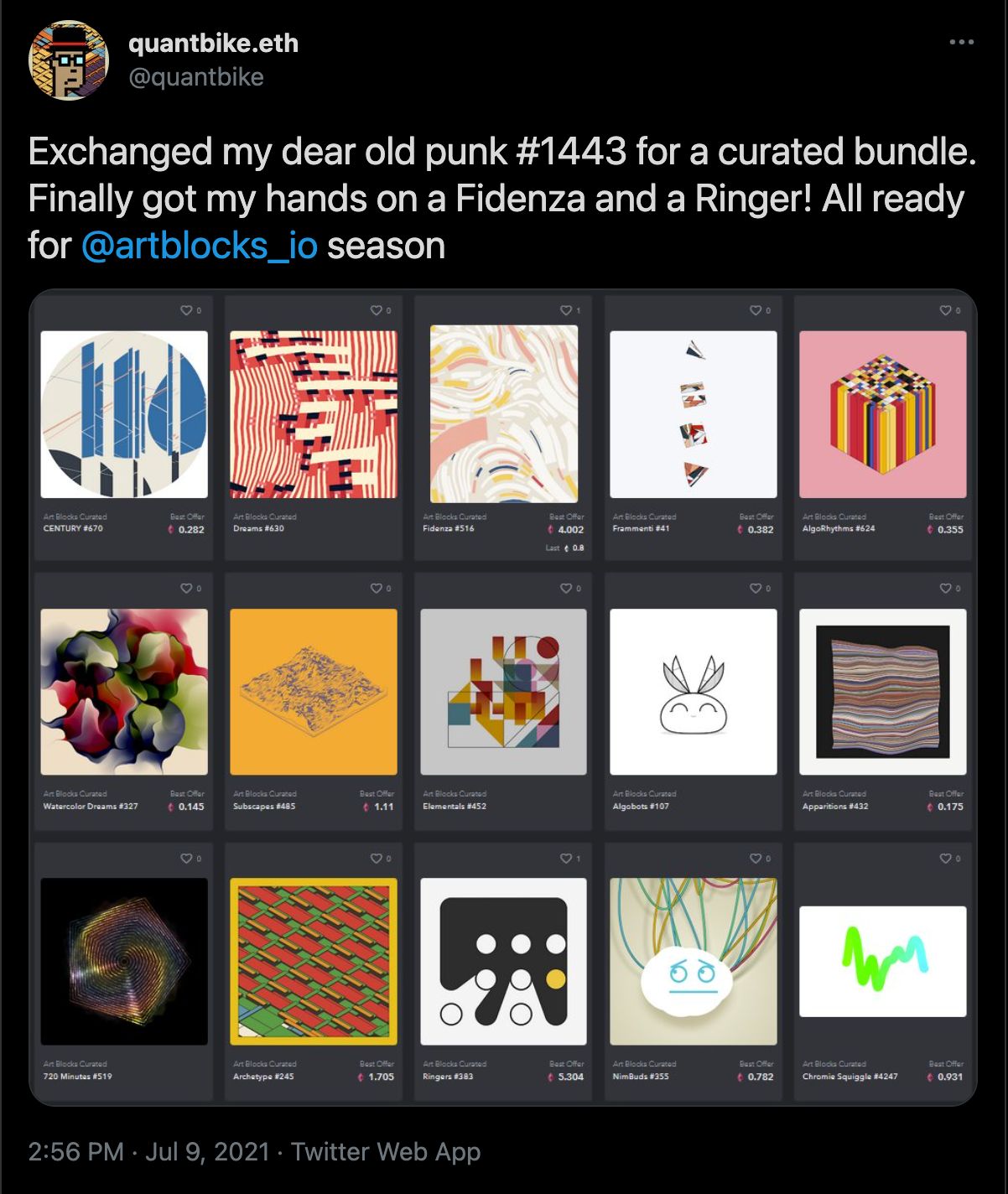
An Ethereum community member by the name of @quantbike recently exchanged one of his Cryptopunks for a collection of 15 works from the Art Blocks Curated collection. At the time, this was arguably the most notable (public) Art Blocks sale since Sotheby’s “Natively Digital” auction last June, as the “Punks” lay claim to a level of legend, rarity, and valuation few bundles of other works ever achieve. Since quantbike’s sale, Art Blocks have exploded in activity - with some works going for well over 100 Ether. As generative art – artwork created with the use of autonomous systems – continues to expand, Art Blocks has become a go to platform for creation, collection, and curation. Since inception, the Art Blocks platform has facilitated over $110 million in cumulative secondary sales with over 70% of sales (~$77m) coming in the past 30 days.
However, are generative artworks from the Art Blocks platform really elevating into the rarefied air of CryptoPunks, or are Art Blocks pieces experiencing fleeting success before their imminent freefall back to normalcy?
A Brief History of Generative Art
Before diving deeper into the Art Blocks (AB for short) platform, it’s worth taking a brief look at the history of generative art. Generative artwork is not a new phenomenon - the Museum of Modern Arts first recognized generative art pioneer Lillian Schwartz way back in 1984, commissioning her for a public service announcement showing off a freshly renovated MoMA. As computers grew in relevance from the 80’s to today, computer-generated art gained notoriety in tandem.
In 2014, generative art underwent its next evolution with the creation of the “GAN” ( Generative Adversarial Network). GAN’s are a type of neural network – algorithms that use machine learning to discover relationships within a set of data – that can recreate media like literature, poetry, and of course, art. In 2018, 34 years after Schwartz brought generative art to the global art stage, 18-year-old artist and Stanford student Robbie Barat used a GAN to mint the first generative artwork on Ethereum, “AI Generated Nude Portrait #1”.
