Aavegotchi: Aave + Tamagotchi in a DeFi Crossover

Aavegotchi is a Tamagotchi-inspired on-chain collectibles game backed by and using the Aave DeFi lending protocol. Aavegotchis and their characteristics live on Polygon’s Ethereum-compatible sidechain, and can be collected, competed, interacted with, and combined in-game. It has been touted as the first true merger of DeFi and NFTs. Aave’s founder Stani Kulechov has stated “I am positive that after the Aave earning experience, Aavegotchis will spread all over the rest of DeFi.” Is this really going to be the case, and more broadly, what are the implications for the trend in adding gaming primitives and NFTs to decentralized finance?
Source: Aavegotchi
Finance, Gamification, Social Layer
Robinhood and Webull became the fastest-growing retail brokerage apps by adding gamification and social networking to the otherwise bland experience of online stockbroking. Social and game-like features such as leader lists, in-app chats, and brightly colored interfaces nudge users towards more interaction with the app, which leads to increased stock trading. However, it is in DeFi where gamification and social networking have made the greatest inroads in the attempt to attract more assets through yield farming and liquidity mining.
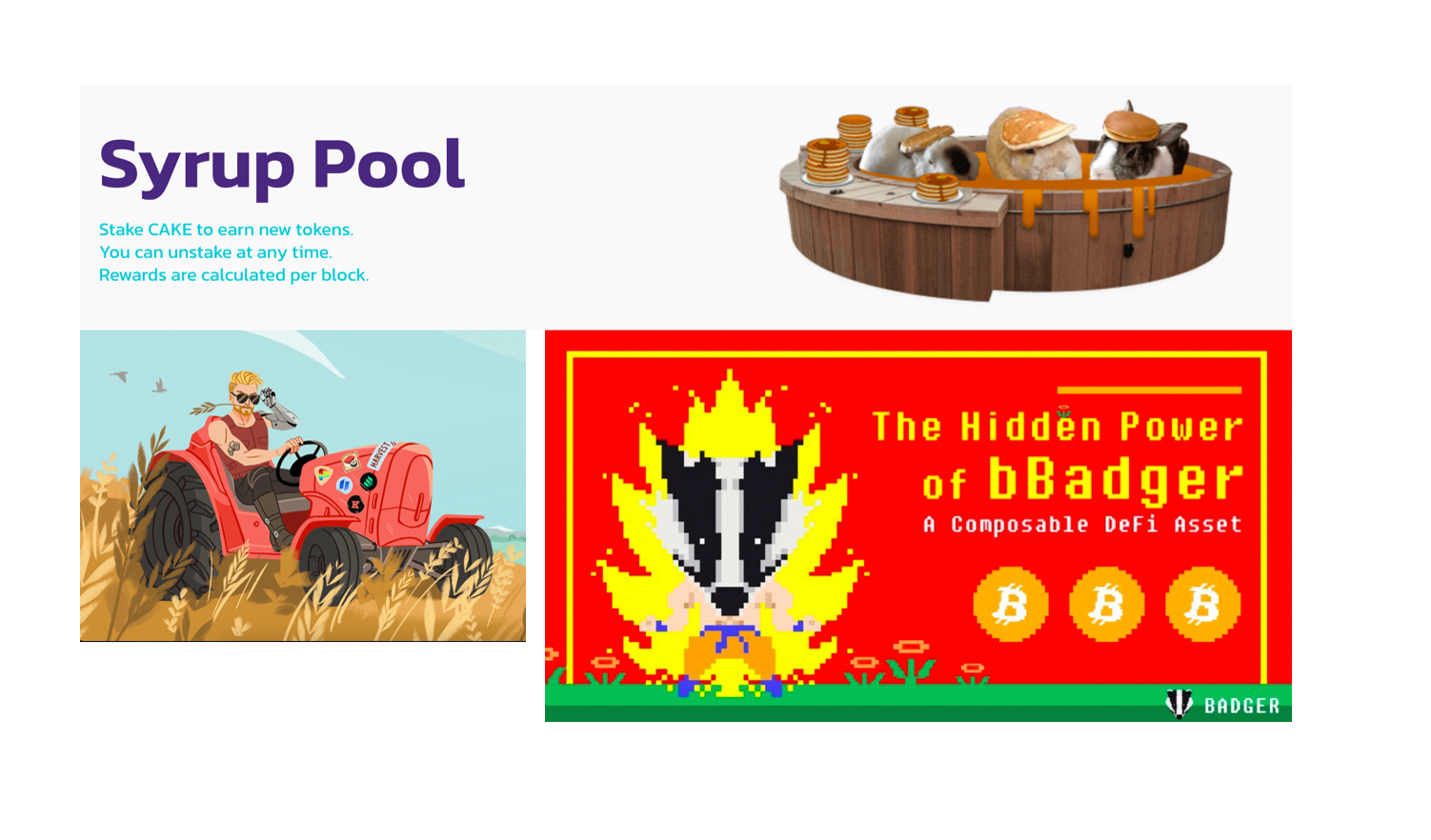
Badger, for example, attracts users with its Nintendo 64-like animations and, literally, games where you can trade reward tokens for NFTs that can be used in partnerships such as BadgerDAO/MEME’s “Diamond Hands”. By interacting with the dapp at many levels, including in minting NFTs, gaming, and governance, users become part of the community rather than simply investors in (boring) yield-enhancing strategies. Sushiswap, PancakeSwap, and Harvest, in particular, use memes and targeted messaging to enhance the DeFi investing and trading experiences.