Aave Arc: Bridging DeFi & Institutional Demand

Aave, alongside Compound and MakerDAO, continues to be one of the most utilized DeFi lending protocols. Recently, Aave and other notable protocols have pursued solutions to reduce transaction costs to enable greater interaction among retail users. In early April Aave deployed on Polygon, a variation of a sidechain known as a “commit chain” that runs parallel to Ethereum. This move proved highly successful, resulting in a significant increase in user activity by allowing those who were once priced out of DeFi to utilize Aave without limiting transaction fees.
Aave’s focus has now shifted to creating a platform that can serve as a bridge between institutions and DeFi. Aave hopes to fulfill the extensive institutional demand for DeFi through its newest product, Aave Arc, previously known as Aave Pro. Aave Arc plans to make Aave accessible to institutional grade customers by providing a KYC required private market where participants can interact with DeFi while being regulatory compliant. As of late July, Aave Arc is set to launch “within weeks.”
Aave Basics
Aave is a decentralized liquidity protocol where users can participate as depositors or borrowers. Depositors provide liquidity to the market and in return earn a portion of the shared interest paid by borrowers. Interest paid by borrowers is calculated by multiplying the utilization rate for a given asset U times the average borrow rate.

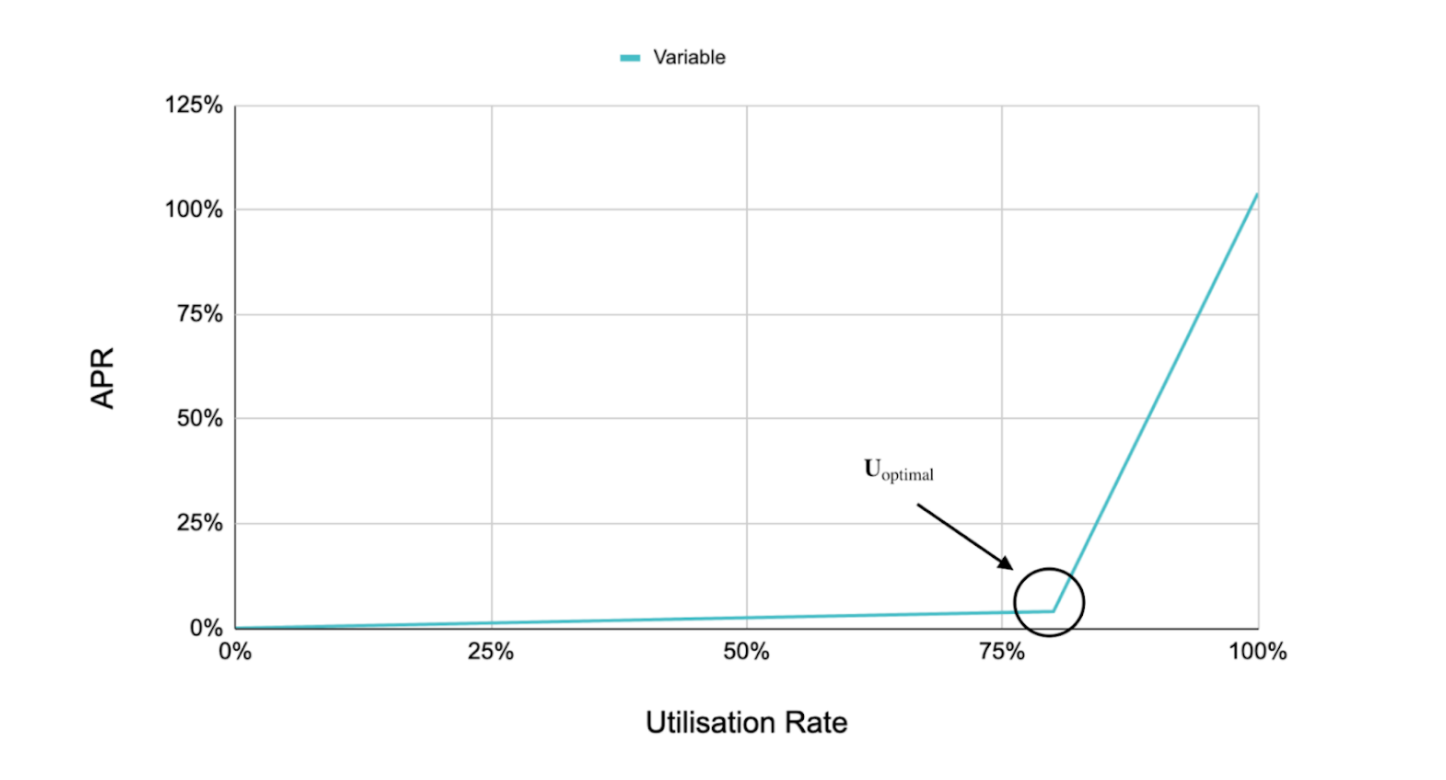
Each asset has a predetermined optimal utilization rate. When the current utilization rate is less than the optimal utilization rate for a given market, borrow interest rates increase slowly. However, when the current utilization rate surpasses the optimal utilization rate, borrow interest rates increase dramatically with increasing utilization. An example of an interest rate curve for a given asset is shown: