0x Protocol: Liquidity-as-a-Service

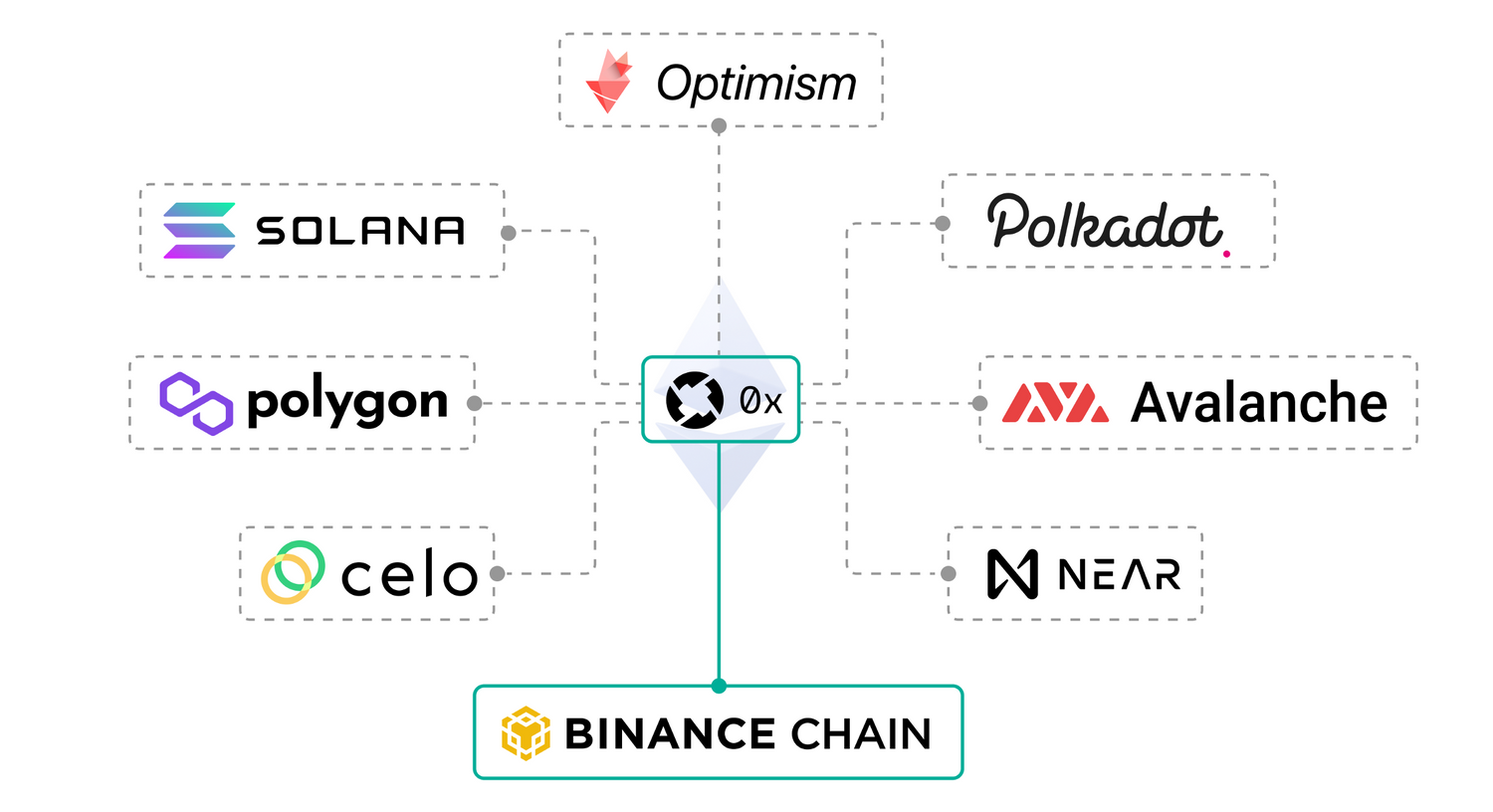
Liquidity sources are dispersing among Ethereum Layer 2 scaling solutions and other Layer 1 networks. Aggregators must make trade-offs when choosing on which L2s they will operate. The popular thesis that aggregators will make exchanges interchangeable is still unproven. Until then, aggregators must build applications on L2s and other networks that attract the most exchange liquidity. These decisions create trade-offs because aggregators may choose to forego liquidity sources on one chain for another, such as forgoing deployment on a roll-up and instead deploying on a high growth side-chain. Until interoperability infrastructure fully develops, trading market fragmentation could deepen.
The 0x project is well-positioned for fragmented liquidity. As a set of developer tools, 0x provides peer-to-peer liquidity functionality for other Ethereum-based applications. To compare 0x with decentralized exchanges would be a mistake. Unlike decentralized exchanges, 0x disaggregates liquidity by enabling composable asset transactions within any application. The project's central feature, it's exchange API, connects users and applications to liquidity sources through the most efficient means available. When the 0x API connects order takers to DEXs, 0x works like an aggregator. Beyond the API, 0x offers its own community of market makers to fill 0x orders. When DEX costs are comparatively high, 0x can connect order takers to its internal market maker network, like an exchange. The 0x protocol always seeks the lowest cost transactions, so it subsidizes market maker costs with ZRX token rewards to keep their prices competitive with the most liquid exchanges. 0x uses DEX and aggregator features to maintain competitive asset markets among all decentralized sources. A diversified liquidity network differentiates 0x from DEXs and aggregators while the project’s tokeneconomics gives it a competitive advantage over both.
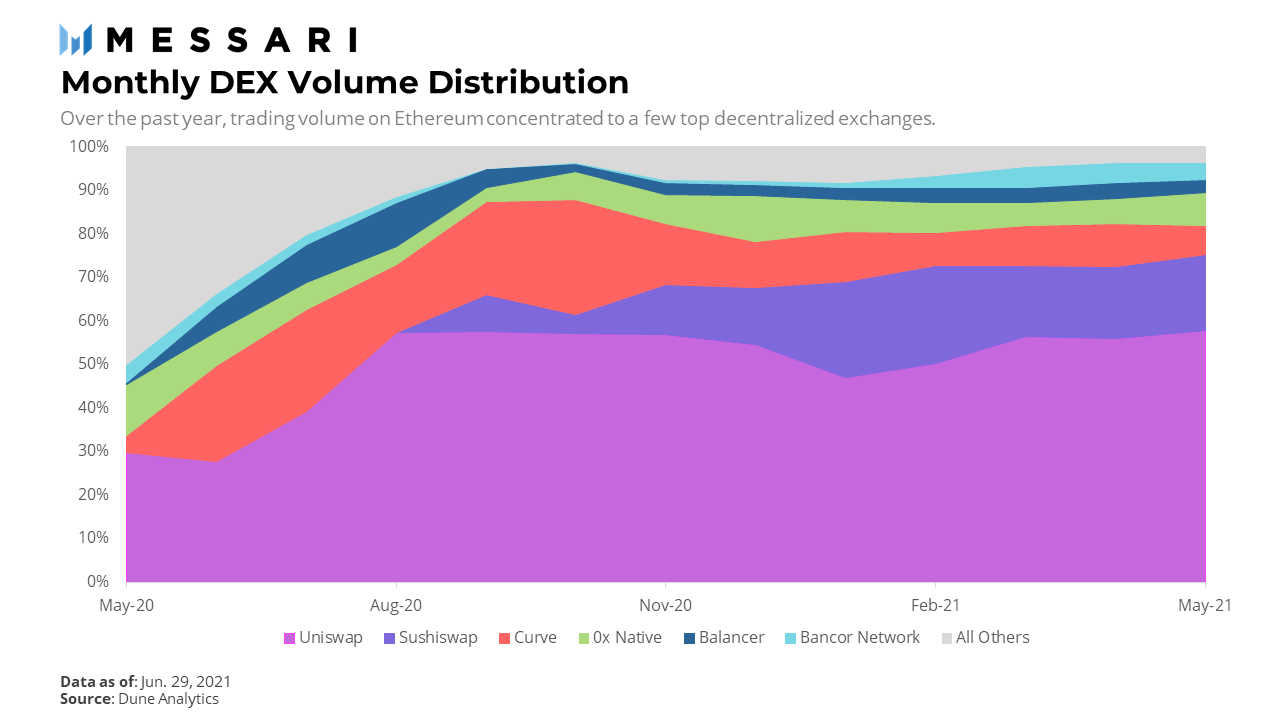
Uniswap and Sushiswap dominated the DEX market over the past year with passive liquidity. These and the other top DEXs pool asset supply from token holders seeking income on their deposits. Automated selling mechanics enable DEXs to seamlessly meet most market demand, however, 0x’s market share shows nearly 7% of all DEX trades require active liquidity.
The latest 0x platform is uniquely positioned to benefit from liquidity fragmentation across L2s. The 0x v4 emphasized their historical market maker focus to maintain market competitiveness among any number of liquidity sources. As markets proliferate, they will work to gain users through reduced costs. The platform's suite of tools route 0x orders through the 0x API to settle at the lowest possible cost to the user. The protocol rewards market makers to supply liquidity directly through the 0x Native swap infrastructure and ultimately attempt to beat DEX pricing. Through 0x, these market makers can supply all 0x API users, or takers, that comprise each market's demand side. The 0x API provides other applications with out-of-the box liquidity sources to meet any volume of user asset swap demand. Currently, applications can build on the 0x API to access market supply within the network, i.e. Ethereum L1, L2, or Binance Smart Chain.