What are stablecoins actually used for?

In a post today Flipside Crypto provided new data visualizations on Tether’s use on the Ethereum blockchain. Looking at USDT’s active supply, defined as USDT having been transferred in the last 30 days, Flipside found a couple of revealing insights.
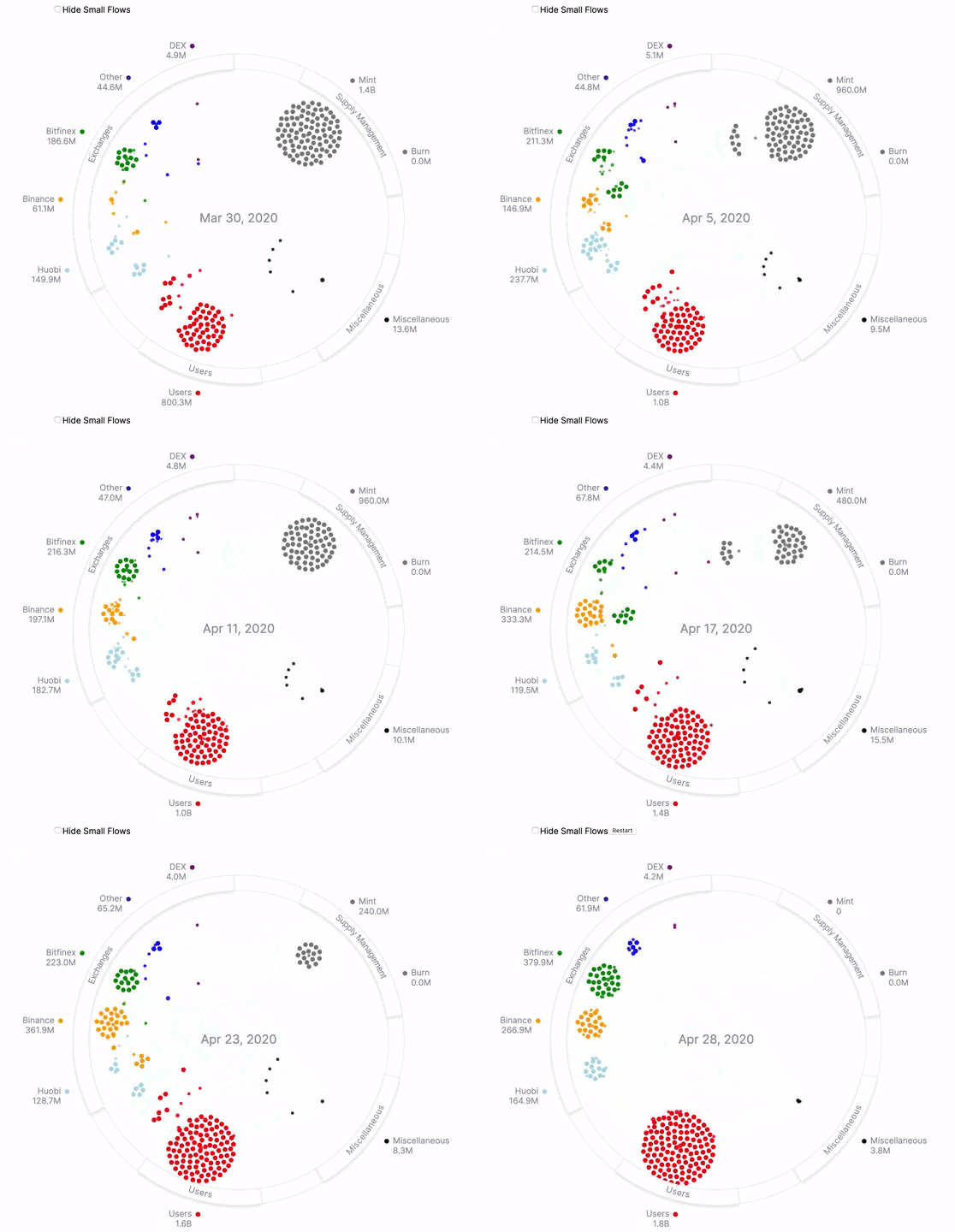
The data shows that most USDT is used on centralized exchanges for arbitrage - profiting from price differences across exchanges. The way this is done in practice is that arbitrageurs first send USDT to their own wallet before sending to a different exchange. This is done to gain more control over and achieve lower transaction fees on USDT transfers between exchanges. Most of this activity takes place between Huobi, Binance, and Bitfinex.
The data also highlights the flow of USDT from issuance to end use. All new USDT is first minted, then sent to Bitfinex, who controls the keys to the printer, before being transferred to other exchanges. In USDT’s entire existence on Ethereum Tether has never burned any supply.
Why it matters:
- USDT is by far the most dominant medium of exchange on Ethereum. Although it's commonly understood that most USDT is being used to move value between exchanges, it's revealing to have data that confirms this.
- The data also suggests that much of the USDT supply is not active. There’s is over 7 billion USDT on Ethereum, yet only ~2 billion are considered active.