To EVM or not to EVM? That is the question.

First there was the battle for DeFi liquidity, then came an NFT mania - are we now in the midst of a cambrian explosion of smart contract platforms? The price appreciation of Solana, Cardano, Polkadot, Terra, and Avalanche, combined with the excitement surrounding the launch of layer 2 (L2) Ethereum scaling solutions like Arbitrum supports this viewpoint. However, as Ryan Watkins points out in his recent article about these ‘smart contract wars’, price action is not everything. The actual activity (represented below by Total Value Locked) in these platforms are a far cry from the staggering valuations compared to EVM sidechains like Polygon, which is trading at a fraction of its newfound competitors.
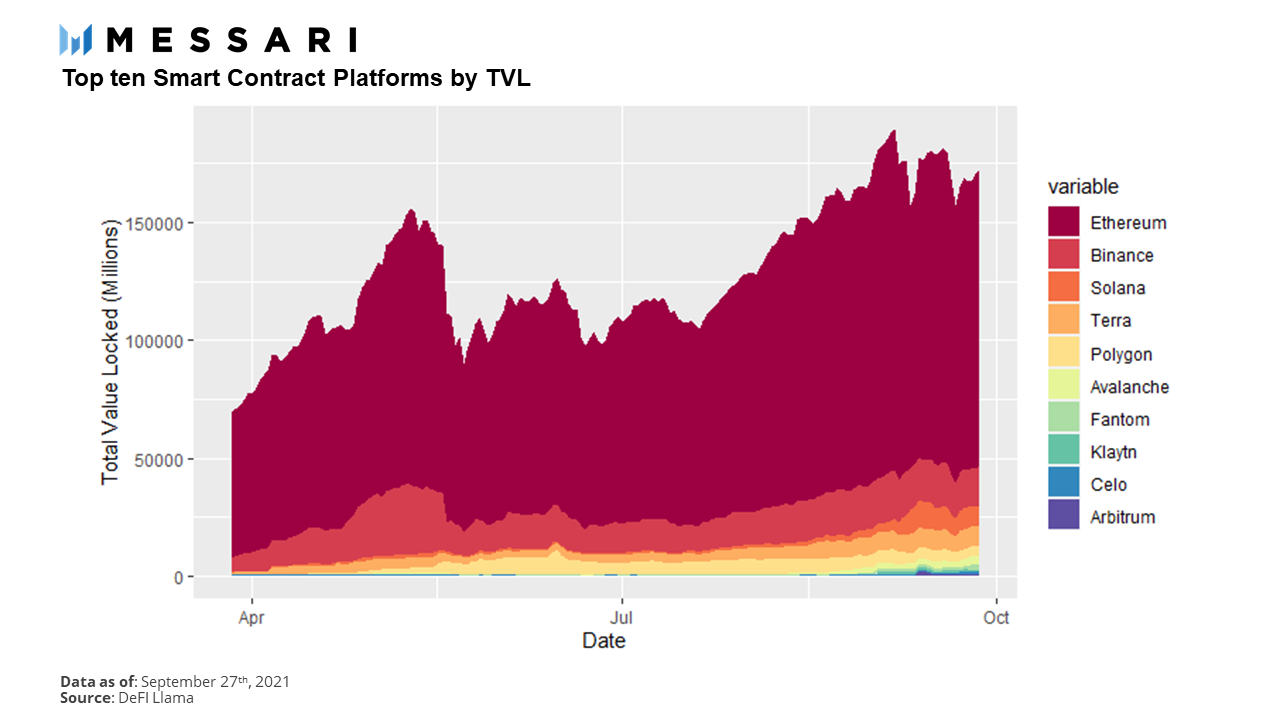
How are relative market-cap welterweights like BSC and Polygon holding on to ‘real’ usage so strongly, and how did new-kid-on-the-block Arbitrum steal its way into the top ten by TVL so fast, punching way above its weight? Do they have something in common?
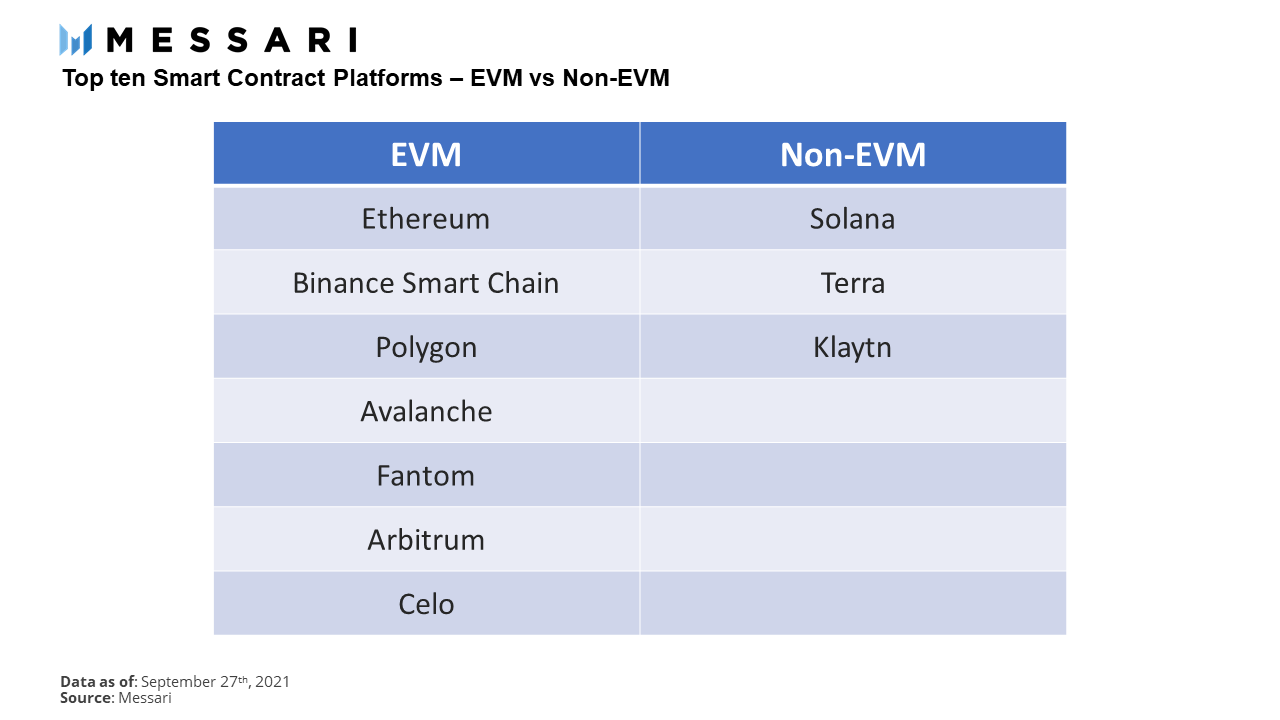
As of this writing, 70% of the top ten Smart Contract Platforms are EVM compatible while 30% are not.The EVM is a ‘virtual machine’ that runs smart contracts, first on Ethereum, and now on a panoply of emerging side-chains and L2s. You can think of it like the Android OS - it runs your favourite apps on Google phones, as well as a wide range of other manufacturers. Why is this detail relevant to evaluating Smart Contract Platforms? Who cares?

Developers care. And developers, as Steve Balmer exhorts us, are the key to success. If you are building a platform, your primary users are developers - they create the attractions that bring users to your theme park. This makes platform choice a critical variable for developers to decide upon from the outset.
