Optimism Analyst Note: Airdrop Retrospective and the Path Forward

In late April, major Ethereum Layer-2 protocol, Optimism announced they were launching their new native token called OP. This airdrop would hand the project over from the founders to the community. The token was allocated with 20% of the supply towards retroactive public good funding, 17% to investors, 19% to core contributors, 25% towards an ecosystem fund, and 19% bucketed for user airdrops (5% first airdrop, 14% future airdrops). A more detailed overview of the token announcement can be found here, and our thoughts on potential valuation can be found here.
In early June, the OP token was officially available to be claimed by eligible parties. A large influx of claimants brought down Optimism’s mainnet for several hours. Optimism was quickly listed on centralized exchanges like Crypto.com and decentralized exchanges like Uniswap. The token itself experienced a heavy amount of sell pressure dropping from $4.50 a token to under $1.00 in a matter of hours. The token price stabilized at around $1.25 or a fully diluted market cap of roughly $5 billion. Only 5% of the overall float of OP is in circulation so we should continue to expect price volatility for the foreseeable future. Because of this heavy sell pressure, there was even a heavily supported proposal on the Optimism governance forum to disqualify sellers from future airdrops.
I think this is actually the right path!
Optimism is all about retroactive public goods funding. The tokens can and will be awarded to those who benefit the ecosystem. Guess who's not benefiting the ecosystem by lowering the token price? Sellers. Optimism is a governance token. The majority of those who sold are not interested in governance. Optimism has already shown they (rightly) are willing to put their ecosystem ahead of profiteers and willing to face the backlash that comes with that. Look no further than their crackdown on airdrop farmers.
While this may be a non-issue for the current airdrop (at the time of writing, 70% of OP tokens from the first airdrop have already been claimed), there still are 14% of the token supply allocated to future airdrops. If folks need to sell for whatever reason, that’s fine, but they shouldn’t be rewarded with future tokens unless they bring some sort of other good to the community (i.e., build something.)
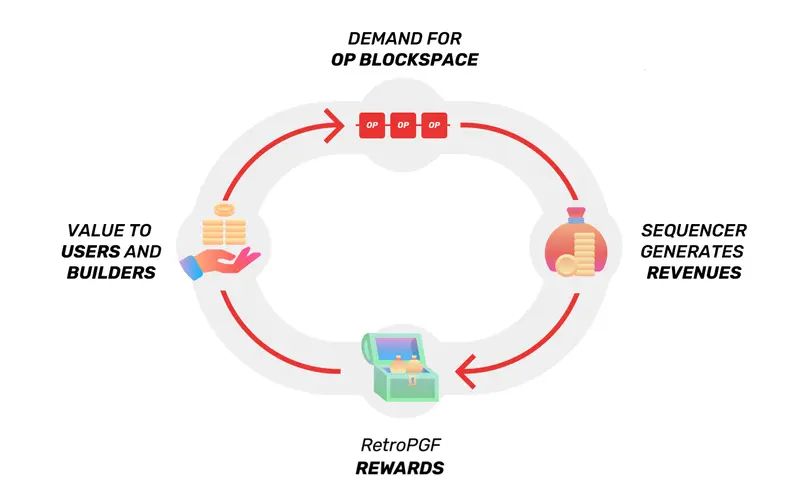
Still, the bigger issue is the long-term revenue accruing to fundamental tokenholders. The Optimism ecosystem needs to more clearly link fees back to the tokenholders. Optimism has a simple business model: they sell blockspace on L2 and buy blockspace on L1. Optimism runs a “sequencer” that governs this process. The sequencer can also capture maximum extractable value (MEV). This money can potentially get distributed to $OP holders.

Tom is a Sr. Research Analyst at Messari. His primary focus is on Layer-1's as well as the relationship between traditional finance and crypto. Prior to joining Messari, Tom worked in Investment Consulting at Meketa and Investment Management at SSGA. Tom studied Finance at Bentley University and earned his CFA and CAIA Charters.