Macro Update: On Bubbles & Taper Tantrums

The crypto selldown of the past couple weeks has seen the most amount of value wiped out. Though fingers were pointed at Elon for triggering the selldown, there wasn’t a single catalyst behind the moves. Perhaps the crypto market was already over-extended and was jittery to react to any negative news. Crypto investors had a rude awakening that, with fresh institutional investor inflows, the asset class is entering a new era. Crypto investors no longer have the luxury to focus only on token dynamics but also need to follow global macro, equities, and credit markets to understand the direction of cross-asset flows.
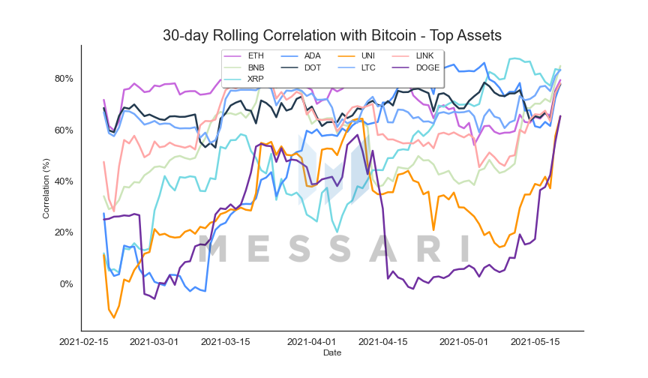
All digital assets are correlated to Bitcoin. In times of uncertainty and local bear markets, crypto assets become increasingly correlated to Bitcoin. During the past couple weeks, correlation among tokens increased to greater than 60%, with some reaching highs of 80%:
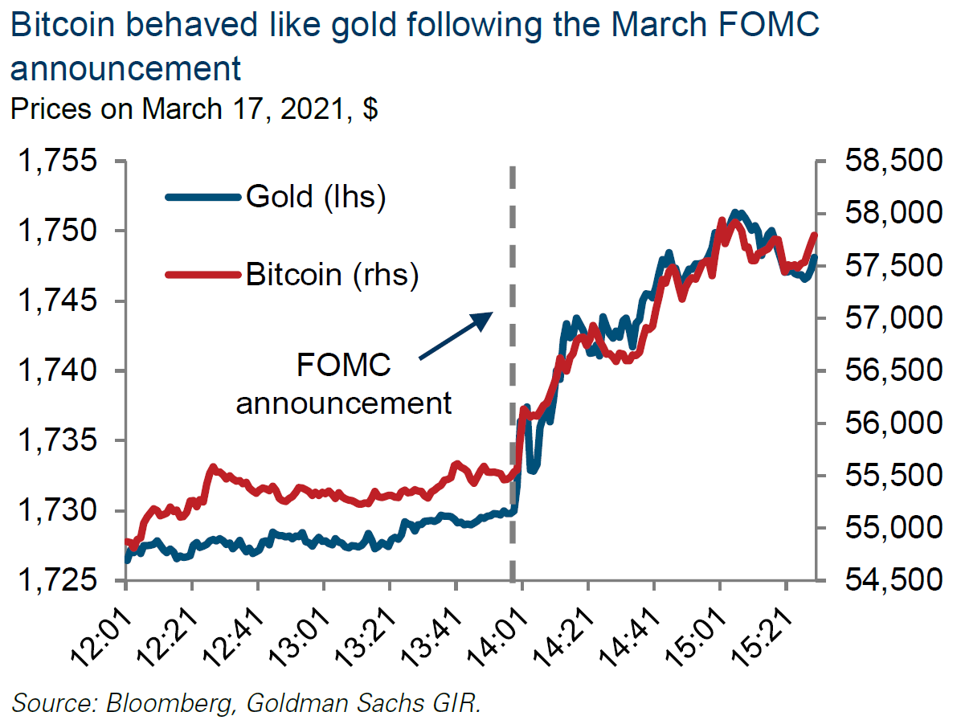
In turn, Bitcoin has increasingly been correlated to global macro factors. Bitcoin’s narrative as a macro asset was cemented on March 17th 2020 during a Federal Reserve speech. In a dovish statement, the Fed said that most policymakers didn’t expect to raise interest rates until after 2023. This “dovish shock” led to falling shorter-maturity Treasury yields, the steeping of the yield curve and the weakening of the USD. Both store-of-value and risk-on assets like stocks and Gold rose. Bitcoin, which has been called digital gold, also rose but with a greater multiplier effect due to its low market cap, ‘newness’ and therefore higher volatility. Nonetheless, the uncanny short term correlation between gold and Bitcoin made institutional investors pay attention. Perhaps Bitcoin is no longer just a meme.
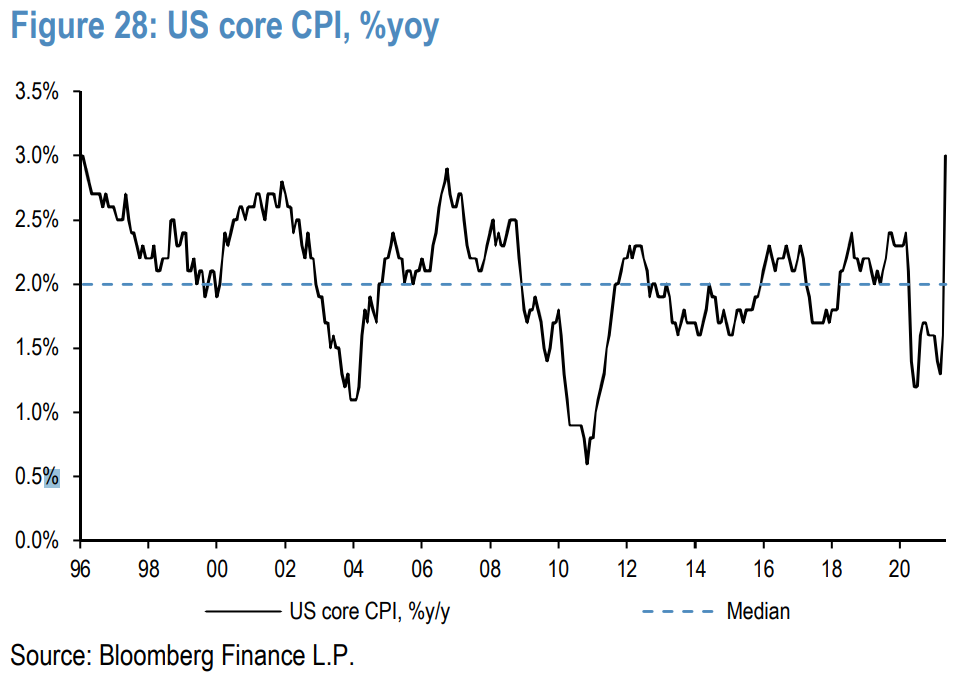
On May 12 2021, a much stronger-than-expected Consumer Price Index (CPI) reading for April was printed. At +4.2% year-on-year (YoY), this US inflation figure was much higher than Mar-2020 (at +2.6%) and the highest since September 2008, at the time of high leverage and Lehman’s collapse. Furthermore, core CPI was at 3.0% YoY, which is the highest print since January 1996, or 25 years. The Fed is looking at a 2% inflation target so the April CPI report was a huge surprise.

Mira was a Senior Research Analyst at Messari. Prior to joining Messari, Mira was a Senior Portfolio Manager for a US$6 billion Asia Pacific equities fund at APG Asset Management. Mira received a BA in Economics and Mathematical Methods in the Social Sciences from Northwestern University.