How Bitcoin Is Improving the Environment

It’s no secret that Bitcoin mining utilizes large amounts of energy for its computational processing. As concerns over the climate crisis continue to rise, industries all around the world are facing increasing pressure to reduce the amount of non-renewable energy sources consumed and the emission of carbon into the atmosphere. The Bitcoin network’s energy usage is easily quantifiable, making it an attractive target for scrutiny. In fact, no other industry has energy usage that is as transparent and easily calculable as the Bitcoin network. The debate over Bitcoin’s energy usage has been around since its inception, and it still persists today. Rather than getting swept up in the sensational headlines and articles criticizing the energy usage, it is important to understand the actual breakdown of the energy data.
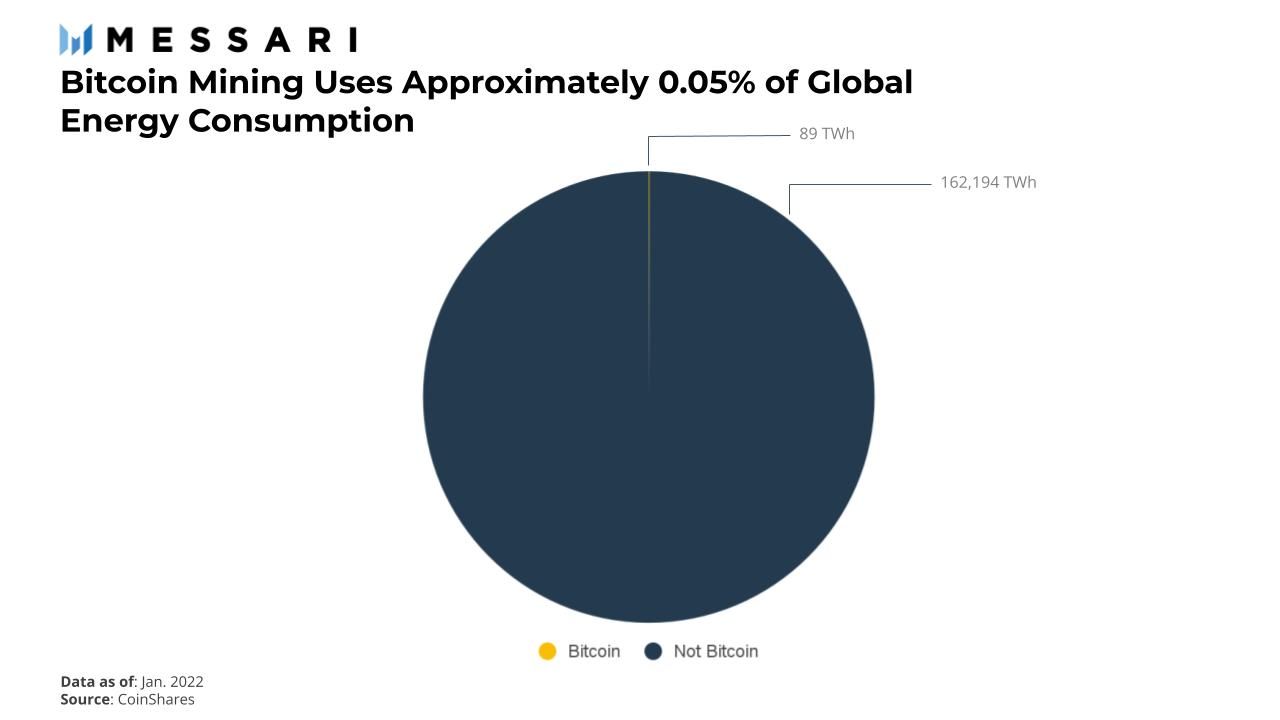
According to CoinShares’ recently published report on the Bitcoin mining network, it was estimated that the network drew 82 TWh of electricity in 2021, a 9% increase from 2020. As of December 2021, the current annualized draw is 89 TWh. To put this in perspective, the Bitcoin network consumed 0.05% of the total global energy consumed in 2019 which practically amounts to a rounding error when it comes to global energy consumption. For comparison, NYDIG reported that domestic tumble dryers and data centers used 108 TWh (0.07%) and 204 TWh (0.13%), respectively, in 2020.
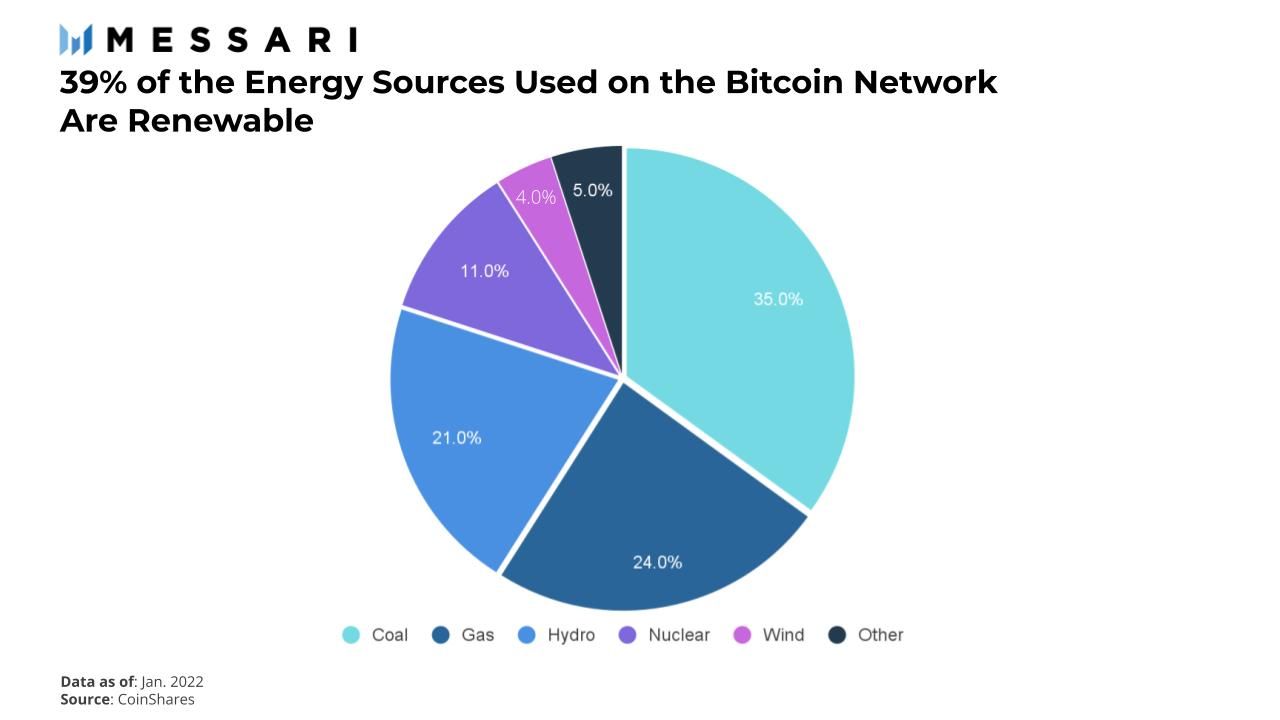
CoinShares also quantified the sources of energy used to power the network and broke down the energy mix into the following categories: coal, gas, hydro, nuclear wind, and other (a mixture of small amounts of oil, solar, and mainly geothermal). Their findings show that 39% of the energy sources consumed on the network are renewable.
Lastly, CoinShares estimated the carbon emission of Bitcoin mining for 2021 to be 41 million metric tons (Mt) of CO2. In comparison, the emissions resulting from the gold industry are estimated to be between 100 and 145 Mt of CO2 annually. Galaxy Digital estimates the global banking system used 264 TWh of energy in 2019. Using the average global carbon intensity of 492 gCO2/kWh, CoinShares was able to equate this to 130 Mt of CO2 emissions per year. For additional context, it was estimated that the global aviation industry, marine transport sector, air conditioners and electric fans, data centers, and tumble dryers each emit 1,982; 1,503; 984; 100; and 53 Mt of CO2 annually, respectively, which can be visualized below.

Sami Kassab is an Enterprise Research Analyst focusing primarily on Web3 Infrastructure and Bitcoin. Sami previously spent 5 years as an Aerospace Engineer designing aircraft engines and missile & defense systems.