BitDAO: Rethinking the Investment DAO

Investment DAOs have become an important vessel in funding the web3 ecosystem in addition to traditional VCs and funds. With more capital coming into the space, projects are starting to figure out optimal ways to deploy funds outside of their own growth in order to increase revenue streams.
We’ve seen this happen with grant programs, but Bybit has taken an interesting approach by forming a DAO with the goal to fund different projects across the blockchain ecosystem: gaming, DAOs, DeFi, etc. Instead of structuring like a decentralized venture fund, BitDAO is set out to fund and maintain entire blockchain ecosystems with large amounts of capital. Though the current focus is on Ethereum, BitDAO is chain agnostic.
The LAO is an investment DAO that has been around for a few years and members have to be accredited in order to participate in deploying grants or funds in exchange for tokenized stock or utility tokens. In contrast, BitDAO is not made up of investors, but rather, contributors and teams who will decide on how funds will be distributed to proposed projects or established teams. BitDAO has quickly become a massive DAO while gathering important partnerships and projects in the process; let’s take a look into how it is structured, its processes, and potential.
Where Bybit Fits In
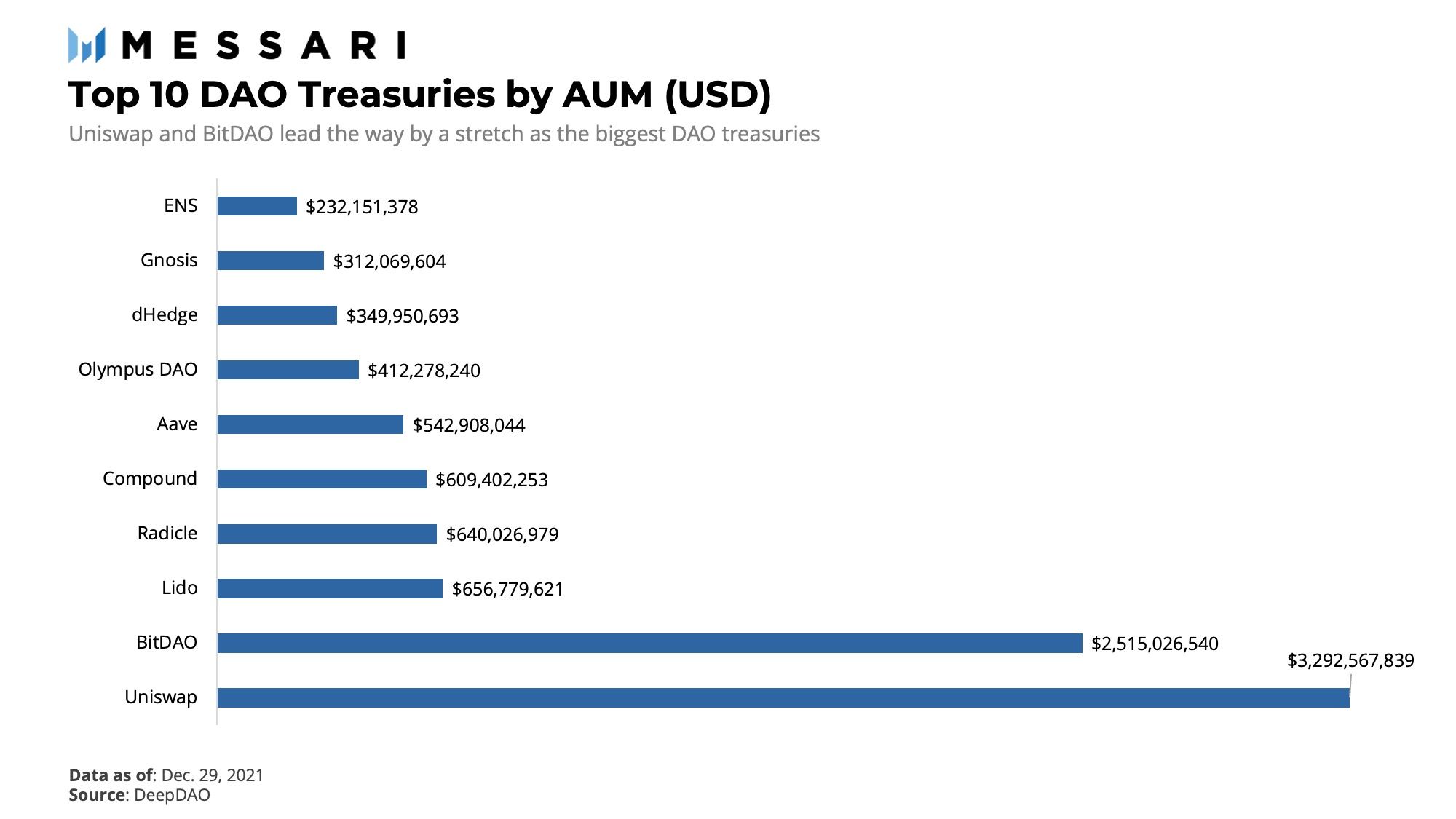
BitDAO launched August 3, 2021, and although it is quite new, it is one of the largest DAOs by treasury size with about $2.5B AUM. The grand vision for BitDAO is to support the growth of open finance and help develop decentralized, tokenized economies. The DAO was started by Bybit, which is a top derivatives exchange based out of Singapore. It launched in 2018 in order to compete against BitMEX in areas where it lacked. Bybit is currently not available for usage in the U.S. or Canada as with other perpetual and future exchange protocols.

Eshita is a Research Analyst at Messari focused on Web3 topics. Previously, she was a Venture Fellow at Bloomberg Beta and prior to that was working on data at Shareworks by Morgan Stanley.